

Custom software development for Singapore SMEs works best when it starts with design and workflow, not a feature list. MT Labs builds web and mobile apps with a clear interface, a workflow designed to remove steps, and AI applied only where it helps, all on infrastructure you own.
A Singapore operations team opens their new internal system for the first time. It works. Every button does what the specification said it would. Six weeks later, half the team is quietly back in the old spreadsheet, because the new tool takes eleven clicks to do what used to take two.
This is the part of custom software development that rarely makes it into a proposal. Software that ships is not the same as software that gets used. Most teams we meet have already paid for a system that technically works and practically sits idle. The real question is not “can it be built”, it is “will anyone want to touch it on a Tuesday afternoon”.
This article covers how we approach custom web and app development at MT Labs, why we lead with design and workflow rather than feature lists, and where custom software is honestly not the right call. If you want the service overview instead, see our web and app development in Singapore page, or browse recent work to see the pattern in practice.
Why most business software fails quietly
Most business software fails not because it breaks, but because people quietly stop opening it. In the average product, around 80% of features are rarely or never used, so the real risk in a custom build is not too little functionality, it is too much of the wrong kind.
That 80% figure comes from a large feature-adoption study by Pendo, and it matches what we see in the field. Business software rarely fails with a crash. It fails with a shrug. People stop using it, revert to email and spreadsheets, and the investment slowly stops mattering.
There are three usual reasons, and none of them are about whether the code runs.
- The interface fights the user. Too many fields, unclear labels, actions buried three menus deep. Every extra step is a small tax, and staff pay it by avoiding the tool.
- The workflow copied the old mess. The software automated a broken process instead of fixing it, so now the mess just moves faster.
- Nobody owns the data or the decisions. The system holds information but does not help anyone act on it, so it becomes a filing cabinet with a login.
Good custom software development starts by naming these risks out loud, before a single screen is designed. That is the difference between a tool that ships and a tool that sticks.
What custom, AI-native software development actually means
AI-native custom software development means designing the interface and the workflow first, then using AI only in the specific places where it removes work. It is not a chatbot bolted onto a form. It is intelligence sitting quietly inside a task people already need to do.
Three principles guide how we build.
Design first: interfaces people want to open
Design is not decoration applied at the end, it is what decides whether software gets used at all. Users form a first impression of an interface in about 50 milliseconds, so a cluttered or confusing screen loses people before they have read a word.
That 50-millisecond figure comes from research at Carleton University, later echoed by Google’s own work on first impressions. Most app development in Singapore treats design as a final coat of paint. We treat it as the foundation: clear typography, sensible defaults, obvious next actions, and a layout that respects how the eye moves across a screen. The measure is simple. A new staff member should be able to complete the core task without a training session.
Workflows built to remove steps, not add them
A frictionless workflow is one where the software does the boring parts, pre-fills what it already knows, hides what is not relevant, and asks for a decision only when a human is genuinely needed. The goal is fewer clicks, fewer tabs, and fewer moments where someone has to stop and wonder what to do next.
Before we design a screen, we map the real task. Where does the work start, where does it get stuck, and how many hand-offs happen along the way. Then we cut. This is the part most software gets wrong, and the part that decides whether people adopt the tool or route around it.
AI where it earns its place
AI earns its place inside custom software when it removes a real step, not when it adds a novelty. That usually means reading messy input, drafting a first version, or surfacing the cases that are stuck, all from inside the workflow rather than as a separate feature to go and use.
There is a Singapore-specific reason to build this way. In 2024, SME adoption of AI in Singapore tripled, but most of it was off-the-shelf generative AI, and only around 44% of AI-using firms used customised or proprietary systems, according to the IMDA Singapore Digital Economy Report. Off-the-shelf is a fine start, but it means your workflow bends to the tool. Custom software bends the tool to your workflow, and it can run on private or self-hosted infrastructure so sensitive data never leaves your environment.
What this looks like in practice
The proof of good custom software development is software you can click through, not promises. At MT Labs we build and run the tools we recommend, which means the design and workflow decisions are ones we live with ourselves.
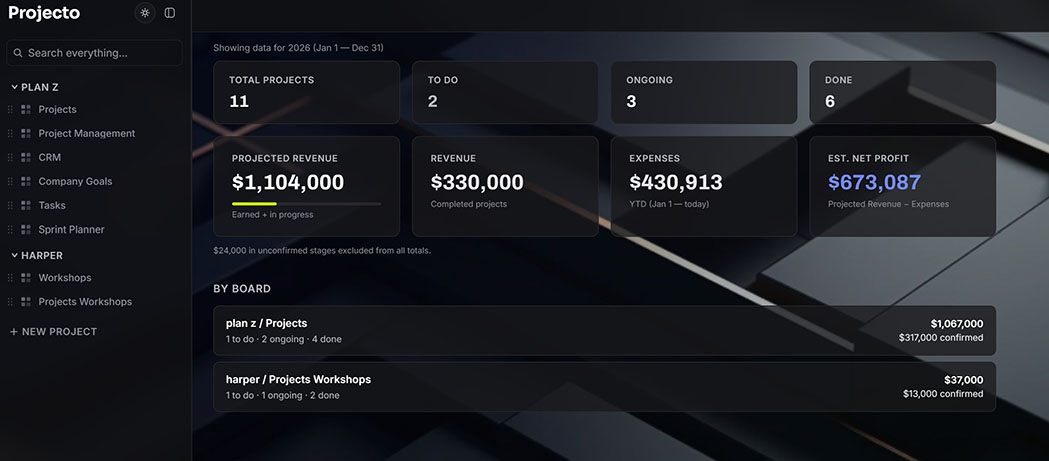
Take Projecto, our own project management and smart CRM. The hard part was never the Kanban board, plenty of tools have those. The hard part was the workflow: reading a messy WhatsApp message or a forwarded email and pulling the name, company, and phone number straight into the pipeline, so nobody has to do manual data entry. That is design and workflow doing the work, with AI quietly inside it. You can see it on the Projecto page.
Or picture a Singapore accounting firm of around twelve people, drowning in client documents scattered across drives and inboxes. A private AI chat platform trained on their own files lets any staff member ask a plain-English question and get an answer with the source, without the documents ever leaving the firm’s own server. The interface looks like a chat they already know how to use. The engineering underneath is what keeps it private.
Then there is ContentMachine, a content and SEO system where each task is an agent that researches, writes, and publishes, all from one board with a clear “verify before publish” gate so a human stays in control. The ContentMachine build is a working example of the same idea: put the complex machinery behind a simple, calm interface, and let the workflow carry the load.
The through-line across all of them is the same. The technology is serious. The experience is simple. That is the combination most software gets wrong in one direction or the other.
Own it, do not rent it forever
When a custom software project is done, the question that matters is what you actually own. With a lot of modern software the answer is only a login, on someone else’s cloud, billed per user every month. We build the other way: the software, the data, and the hosting are yours.
The application should run on infrastructure you control, whether that is your own server or a private machine we set up for you. Your data stays inside your environment, which keeps you on the right side of Singapore’s data protection rules and out of the per-seat pricing trap where every new hire quietly raises your monthly cost.
Ownership is not only a privacy argument. It is a cost-control argument and a longevity argument. The system you own does not get sunset because a vendor changed strategy, and it does not hold your data hostage when you want to grow.
Where custom software development is not the right call
Custom software is the wrong choice when a standard tool already fits, when the underlying process is still changing every month, or when the volume is too low to justify the build. Part of our job is telling you when that is the case.
- A standard tool already fits. If an off-the-shelf product does the job well and you are comfortable with where it stores your data, buy it. Do not commission a bespoke version for the sake of it.
- The process is not settled yet. If the underlying workflow changes every month, lock down the process first. Building software around a moving target is expensive rework waiting to happen.
- The volume does not justify it. Some tasks are genuinely fine as a shared spreadsheet. Automation earns its cost at scale, not at ten records a week.
Saying this openly is the point. Credibility comes from what we are willing to say no to, not from claiming every problem needs custom software.
Summary
Custom software development for Singapore SMEs should be judged on adoption, not just delivery. The software that earns its place is the one with a clear interface, a workflow that removes steps, AI applied only where it helps, and an ownership model that keeps your data and your costs under control.
If that sounds like what you have been missing, three things are worth doing next: read the full web and app development in Singapore overview, think about the one workflow in your business that everyone quietly avoids, and tell us about it.
MT Labs helps companies across Singapore deploy AI tools they actually own. Private infrastructure, no recurring cloud subscriptions, and a setup built around how your team already works. Whether you need a small assistant for one team or a full agentic AI for the whole company, we size the setup to what you need and what your team can manage. Get in touch and we’ll map it out with you.
FAQ
What is the difference between web development and app development in Singapore?
Web development builds software that runs in a browser, reachable from any device with a login and nothing to install. App development usually refers to a mobile app installed from an app store. Many Singapore SMEs are best served by a web app, which works on desktop and mobile from one codebase and updates instantly for everyone. We help you choose based on how your users actually work.
How much does custom software development cost in Singapore?
Cost depends entirely on scope, so treat any figure quoted before a proper conversation as a guess. What matters more than the number is a clear scope, a clear view of what recurs monthly, and no surprise per-seat fees that grow as your team does. It is best to get in touch so we can size a sensible first release.
Do you build mobile apps or only web apps?
Both. The right answer depends on the job. If your users need offline access, camera, or push notifications on the go, a mobile app makes sense. If they mostly work at a desk or across shared devices, a web app is usually faster to build, cheaper to maintain, and easier to update.
How do you keep our data compliant with PDPA?
We can build and run your software on infrastructure you own, so customer data stays inside your environment rather than on a third-party cloud. That makes PDPA compliance and data residency far simpler, because the data never leaves the building in the first place.
How long does a custom web or app project take?
It depends on scope, but we deliberately start small. A focused first version that solves one real problem well is better than a giant build that arrives late. We scope a first useful release, get it into people's hands, then extend from there.
Can you add AI to software we already have?
Often, yes. If your existing system can expose its data safely, we can add a private AI layer on top, for example document search, contact extraction, or drafting, without replacing what already works.
